
Everything you need to know before you put your hands on Kumkumadi Tailam
Kumkumadi Tailam, a revered Ayurvedic herbal oil prepared using saffron (kumkuma) and potent other ingredients like manjistha, sandalwood, and lotus. This harnesses the ancient wisdom of balancing the body's three doshas: Vata, Pitta, and Kapha. In Ayurveda, Vata governs movement and dryness, Pitta controls metabolism and heat, and Kapha manages structure and lubrication. Imbalances—such as excess Vata causing dry skin, aggravated Pitta leading to inflammation, or stagnant Kapha resulting in dullness—manifest as skin issues like acne, wrinkles, or uneven tone. This tailam pacifies all three doshas synergistically: its cooling saffron soothes Pitta, nourishing oils lubricate Vata, and detoxifying herbs dispel Kapha sluggishness, promoting radiant, youthful skin from within.
To reap maximum benefits, incorporate a nightly pre-sleep ritual. This timing aligns with the body's natural repair phase, enhancing absorption as circulation slows.
Step-by-Step Nightly Kumkumadi Tailam Ritual
Night-time is when your skin's repair cycle peaks, making it the ideal time for the oil to work its magic.
Cleanse Thoroughly: Wash your face with a gentle, sulfate-free cleanser to remove all makeup, dirt, and impurities, ensuring a clean canvas for absorption. If the skin does not feel very dirty or greasy, a simple plain water wash is enough.
Dampen Skin (Optional but Recommended): Gently pat your face dry with a soft towel, leaving the skin slightly damp. Oils lock in moisture best when the skin is not fully dry.
Warm and Dose the Oil (Optional): Take just 4-6 drops of Kumkumadi Tailam in your palm (use 2-3 drops for very oily skin). Rub your hands together lightly to warm the oil, activating the herbal compounds.
Gentle Massage: Dot the oil across your forehead, cheeks, chin, and neck. Using your fingertips, massage the oil into your skin with light, upward, and outward circular strokes for 1–2 minutes. Focus on areas with pigmentation or fine lines.
Leave to Absorb: For the best results, allow the oil to absorb and work overnight. In the morning, wash your face with a mild cleanser. For very oily skin, consider washing it off after 30-60 minutes instead of leaving it on overnight.
Consistency is key; use it nightly to witness visible improvements in your skin's texture and natural glow over a few weeks. This skin elixir is not just a medicine that corrects many skin imperfections, but also provides complete nutrition to the skin.
The ingredients used in Kumkumadi's lengthy and meticulous preparation release immense amounts of vitamins, amino acids, minerals, antioxidants and flavonoids in the concoction. These nutrients, in turn, repair, protect and nourish the skin to the fullest.
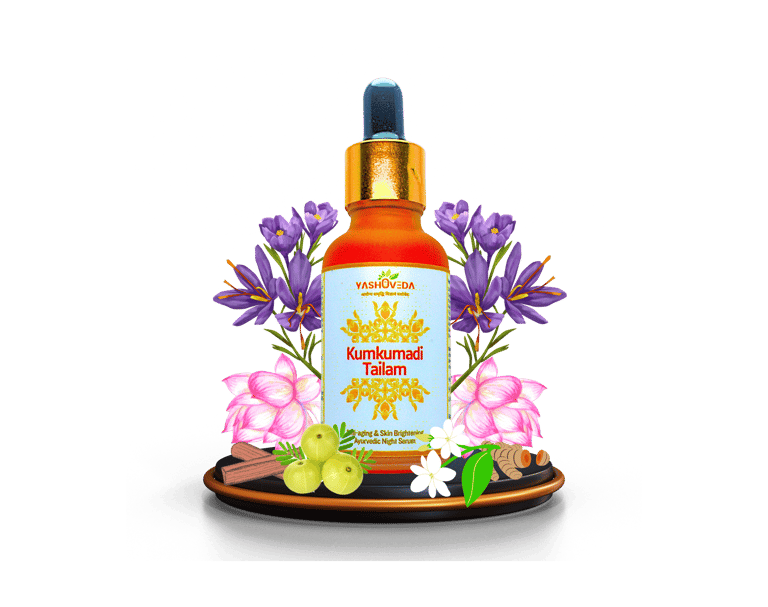
What makes Yashoveda's Kumkumadi BEST in the world?
The Science: With Yashoveda’s proprietary preparation method, the MEDIUM (black sesame oil) and the medicinal HERBS are converted into ONE. The resultant tailam delivers the benefits of the combined herbs (micro-nutrition) in a far more absorbable manner than any other brand. It is a non-greasy, fast-absorbing amalgamation that hydrates and nourishes skin to its fullest potential.
Sourcing: Yashoveda uses only the highest-grade ingredients at their peak potencies, sourced directly from their native origins. The in-house proprietary know-how gives it a picture-perfect Kumkumadi Tailam that delivers.
Compatibility: This formulation is specifically designed to be equally beneficial for sensitive skin types, providing calm and balance.
Skin Empowering: A synergistic blend of 31 self-balancing herbs provides the complete nutrition required to empower skin for faster cell turnover and fight off anomalies such as uneven tone, pigmentation, dryness, and signs of premature ageing.
Detoxifies and cleanses skin from the harm caused by chemicals present in cosmetics and pollution
Reduces blemishes, scars, redness, and black spots
Removes under-eye dark patches
Nourishes and maintains the right amount of moisture in the skin
Fixes the discolouration of the lips due to smoking
Minimises the appearance of stretch marks during pregnancy
Reduces signs of ageing
Makes skin firm and bouncy
Diminishes fine lines and wrinkles
Prevents frequent appearances of acne
Reduces white and blackheads
Improves skin complexion and texture
Reduces suntans
Works as a natural De-tan for skin

What it does
It starts with skin detoxification for the initial few days. You see yourself turning brighter as your skin’s pores clean up naturally. After a week or so you start feeling your skin deeply nourished and softness has increased. Your minor spots and blemishes will start fading in a fortnight of use. Excessive dryness or excessive oiling will start correcting. Within 4 weeks of its use, your skin starts shedding pigmentations, discolorations, and black spots. Some old and tough spots, pigmentations, and melasma conditions may take up to 6-8 months of regular use to disappear. This single two-minute skin care daily ritual will leave you with a deeply nourished and ever-glowing radiant look.
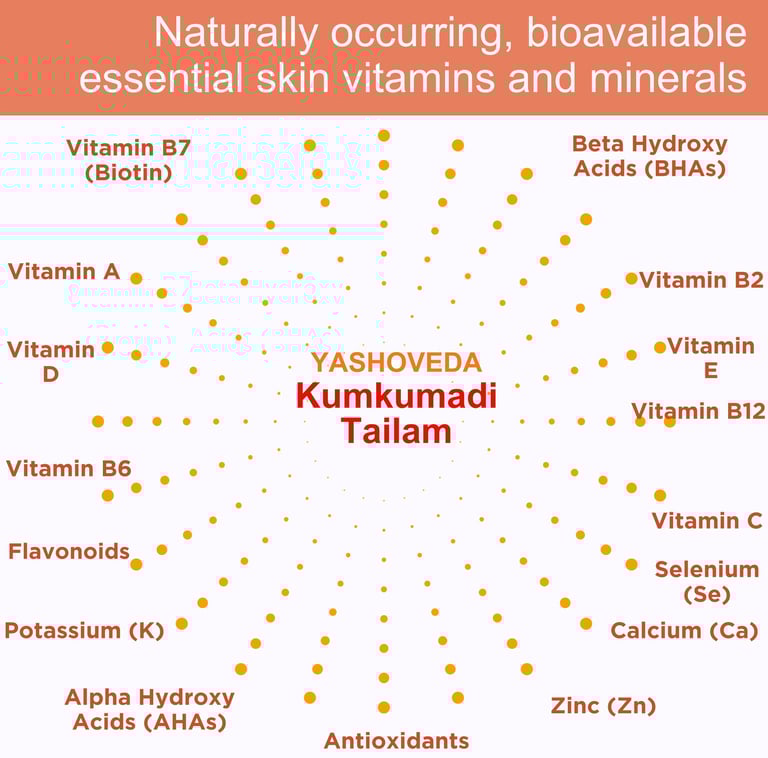
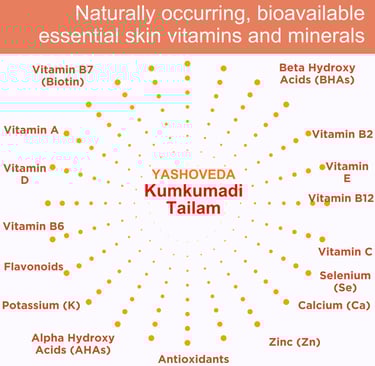
Important Ingredients of Yashoveda Kumkumadi Tailam
Red and white sandalwood oils contain alpha- santalol. They work on the skin to inhibit the production of tyrosinase (hence melanin and pigmentations). It is anti-inflammatory and prevents chemical and UV-induced skin carcinogenesis. High amounts of vitamins A and E in them lighten and even out skin tone, preventing and eliminating dark spots and discolourations.
Lotus and Palas flower extracts are high in Vitamin B, C, iron, and protein. All these assist in keeping your skin healthy and lotus-like fresh. In addition, they contain hydroxy acids (antioxidants) that work to relieve several skin conditions, such as acne, scars, pigmentation, dryness, and wrinkles. Palash also has astringent properties. It causes the contraction of skin cells that help control pimples and boils on the skin.
Yastimadhu, Manjistha, Turmeric, and Licorice root extracts keep your skin hydrated and prevent dryness. It also helps to keep skin toned by increasing its elasticity, which keeps the skin tight and firm. They also help reduce the itchiness of the skin and increase the flow of blood circulation, so your skin will gain a smooth, unblemished texture.
Goat Milk contains high amounts of alpha-hydroxy acids that remove the dead skin cells on the surface of your skin, blocking barriers and allowing the antioxidants to penetrate deeply. Goat and cow milk together make a powerhouse of Vitamins A, B, C, and E, along with healthy amounts of lactic acids. They work to reduce the appearance of dark spots, acne scars, melasma, and other discolourations.
Saffron has been prized for its health and cosmetic benefits. Its extracts contain powerful bioactive compounds like crocin, crocetin, and antioxidants, which contribute to its precious beauty-enhancing qualities. Saffron is a natural skin brightener, anti-aging agent, natural moisturizer, acne, and pimple treatment, skin texture improver, and skin tone enhancer.
Vetiver root oil is Laden with antioxidants. Its main compound khusenic acid has anti-inflammatory and anti-microbial properties. It effectively reduces your skin inflammations, cures infections, and promotes overall skin health. It cleanses your skin from within and unclogs pores that ultimately cause blackheads and whiteheads.
Saffron/ Kumkuma (Crocus sativus): Saffron, known as "kesar" in Ayurveda, has been used for centuries in traditional Indian medicines to promote skin health. It improves skin texture and promotes a radiant complexion by enhancing blood circulation and oxygen flow to the skin. Its potent anti-ageing properties help protect the skin against oxidative stress and free radical damage, which contribute to premature ageing. It stimulates collagen production, which helps to keep the skin firm and youthful-looking. This is rich in minerals and vitamins, including vitamin C and potassium, which help to hydrate and nourish the skin. It contains carotenoids, which act as natural moisturisers. Saffron has anti-inflammatory properties that can help soothe and calm irritated skin and reduce inflammation associated with conditions like acne, eczema, and psoriasis. It is known for its skin-lightening properties that reduce the appearance of dark spots, hyperpigmentation, and other skin discolourations.
Vata (Ficus Benghalensis): Vata also known as the Banyan tree, has potent properties on the skin, including anti-inflammatory, anti-bacterial, and anti-ageing. It also helps in healing wounds and skin scars and, moisturising them.
Pabmaka (Prunus Cerasoides): It is known for its astringent, anti-inflammatory, antimicrobial, and cooling effects. Padmaka is often used in Ayurvedic formulations to treat various conditions such as diarrhoea, dysentery, skin disorders, bleeding gums, and inflammation.
Usira (Vetiveria zizanioides): Usira, also known as vetiver, is a type of grass, known to have anti-inflammatory properties that soothe and calm irritated skin. It has natural antibacterial properties that help to prevent and treat skin infections caused by bacteria. Usira has astringent properties, which means it can help to tighten and firm the skin, reducing the appearance of pores and giving the skin a more youthful, radiant appearance.
Yastimadhu (Glycyrrhiza glabra):
Yastimadhu, also known as licorice is a popular herb that has natural anti-inflammatory properties that help soothe and calm irritated skin. It contains glabridin, which is a natural skin brightener. It can help to reduce the appearance of dark spots and hyperpigmentation, leaving the skin looking brighter and more even-toned. It is particularly helpful for dry, flaky skin. In addition to the above, it contains powerful antioxidants and antibacterial properties.
Lodhra (Symplocos racemosa): Lodhra has astringent properties, which means it can help to tighten and firm the skin, reducing the appearance of pores and giving the skin a more youthful, radiant appearance.
Swet-Chandana (Santalum album Linn.): Swet Chandan has natural anti-inflammatory and moisturizing properties that soothe and hydrate irritated skin. Its natural skin-lightening agents reduce the appearance of dark spots and hyperpigmentation leaving the skin looking brighter and more even-toned. It also contains antioxidants that can help protect the skin against oxidative stresses and free radical damage that contribute to premature aging.
Kamala (Nelumbo Nucifera): Lotus flowers contain natural compounds that offer protection against the harmful effects of UV radiation, which help to prevent sun damage and premature aging. It contains antioxidants that help to protect the skin from damage caused by free radicals and environmental stressors. Flower extract contains natural skin-brightening agents that can help to reduce the appearance of dark spots and hyperpigmentation
Rakta-Chandana (Pterocarpus santalinus): Rakta Chandana has natural moisturizing properties, which can help to hydrate and nourish the skin, leaving it soft and supple. It has natural antibacterial properties, which can help to prevent and treat skin infections caused by bacteria. Rakta Chandana contains antioxidants that help to protect the skin against oxidative stress and free radical damage
Kaliyaka (Agaru) Aquilaria agallocha:
Kaliyaka has natural astringent properties, which can help to tighten and tone the skin, reducing the appearance of fine lines and wrinkles.
Amla (Phyllanthus emblica): Amla is rich in vitamin C and other nutrients which help to brighten the skin and reduce the appearance of dark spots and hyperpigmentation. It promotes collagen production, which is essential for maintaining healthy, youthful-looking skin. Amla has natural moisturizing properties, which can help to hydrate and nourish the skin.
Lacca (Laccifer Lacca): Laccifer lacca or lac, is a resinous substance that is secreted by insects that feed on certain trees in India and Southeast Asia. Lac has natural antimicrobial properties, which help to prevent and treat skin infections caused by bacteria and fungi. Lac has natural skin-lightening properties, which can help to reduce the appearance of dark spots and hyperpigmentation, leaving the skin looking brighter and more even-toned.
Patanga (Caesalpinia Sappan): Patanga, also known as Indian redwood, is a tree native to Southeast Asia, India, and Sri Lanka. It has various health benefits, including those related to the skin. Patanga has natural antimicrobial properties, which can help to prevent and treat skin infections caused by bacteria and fungi. It has been traditionally used in Ayurveda to help promote wound healing and reduce scarring.
Manjista (Rubia cordifolia): Manjista has natural antimicrobial properties, which can help to prevent and treat skin infections caused by bacteria and fungi. It contains natural antioxidants, which can help to protect the skin against oxidative stress and free radical damage, both of which can contribute to premature aging
Indivarah (Monochoria vaginalis):
Indivarah has natural anti-inflammatory properties, which help to reduce inflammation and redness associated with various skin conditions. It has natural moisturizing properties, which can help to hydrate and soothe dry, irritated skin
Tejapatra (Cinnamomum tamala):
Tejapatra has natural conditioning properties, which can help to hydrate and soften the skin. Tejapatra has natural antimicrobial properties, which prevent and treat skin infections caused by bacteria and fungi
Kustha (Saussurea lappa): Kustha, also known as Saussurea lappa or costus root, is a medicinal plant that is native to the Himalayan region. It has powerful antioxidant properties and helps in wound healing. Kustha has natural skin-lightening properties, which can help to reduce the appearance of dark spots and hyperpigmentation, leaving the skin looking brighter and more even-toned
Daruharidra (Berberis aristata): Daruharidra, also known as Berberis aristata or Indian barberry, is a medicinal plant that is native to India and other parts of South Asia. It has natural conditioning properties, which can help to hydrate and soften the skin. It also has natural antimicrobial properties, which can help to prevent and treat skin infections
Nagakesara (Mesua ferrea): Nagakesara, also known as Mesua ferrea or ironwood tree, is a medicinal plant that is native to India. It contains antiseptic and disinfecting properties that prevent and heal wounds. It also plays an active role in reducing scars. Nagakesara has natural skin-brightening properties, which can help to reduce the appearance of dark spots and hyperpigmentation
Palasa kusuma (Butea monosperma):
Palasa kusuma has natural skin-brightening properties. It is known to have astringent, diuretic, and tonic properties.
Gairika (Red Ochre): Gairika, also known as red ochre or hematite, is a naturally occurring clay mineral that has been used for centuries in Ayurvedic medicine for various health benefits. It has natural detoxifying properties, which can help to draw out impurities and toxins from the skin. This can help to reduce the appearance of blemishes and improve the overall clarity of the skin
Haridra (Curcuma longa): It treats wounds and other skin injuries. Haridra has strong anti-inflammatory properties due to the presence of curcumin, a bioactive compound. It helps to reduce redness, swelling, and inflammation in the skin caused by various skin conditions. It also brightens the skin and improves the complexion by reducing the appearance of dark spots, hyperpigmentation, and other skin discolourations.
Rasna (Pluchea lanceolata): Rasna contains antioxidant compounds that can help to protect the skin from damage caused by free radicals. It also has moisturising properties that can help to hydrate and soften the skin. It may be particularly helpful for dry, rough, or flaky skin.
Priyangu (Aglaia elaeagnoidea): Priyangu is a rich source of antioxidants, which can help protect the skin from damage caused by free radicals. This may help to slow down the ageing process and reduce the appearance of fine lines and wrinkles. It also has astringent properties, which means that it can help to tighten and firm the skin
Malati (jati) (Jasminum officinale Linn.):
Malati has traditionally been used in Ayurvedic medicine for its skin-lightening properties. Malati has anti-inflammatory properties also that reduce inflammation and redness in the skin.
Sarsapa (Smilax ornata): Sarsapa has traditionally been used in Ayurvedic medicine as a detoxifying agent. This may help to remove impurities from the skin and promote a clear, healthy complexion
Kankolika (Piper cubeba): Kankolika has a cooling effect on the skin, which may be beneficial for reducing inflammation and soothing irritated skin. Its astringent properties help to tighten and tone the skin
Karpura (Cinnamomum camphora):
Karpura has analgesic properties that may help to reduce pain and discomfort associated with skin conditions such as sunburn and insect bites
Godughda (Cow's Milk): Cow milk contains lactic acid, which is known to promote collagen production in the skin. Collagen is a protein that helps to keep the skin firm and elastic, which can help to reduce the appearance of fine lines and wrinkles. It also contains alpha hydroxy acids (AHAs), which can help to exfoliate the skin and promote a brighter, more even complexion
Ajākṣīra (Goat Milk): Goat milk contains vitamins A and E, which are known to promote healthy skin and reduce the appearance of fine lines and wrinkles. Goat milk also contains natural fatty acids that can help to moisturize and nourish the skin, leaving it feeling soft and hydrated
Til Oil (Sesamum indicum): Sesame oil is rich in fatty acids, which can help moisturize and nourish the skin, leaving it feeling soft and supple. Sesame oil also contains a natural SPF of about 4, making it a mild but effective sunscreen that can help protect the skin from harmful UV rays. It has been used for centuries as a natural remedy for wounds and burns due to its healing properties. The oil contains antioxidants that can help to protect the skin from damage caused by free radicals, which can contribute to premature aging and skin damage.
Complete and Transparent List of Ingredients in Yashoveda Kumkumadi Tailam
Request form for a FREE Sample
(By Invitation Only)